Skip to content

You might think you left chickenpox behind years ago, but your body sometimes has a different plan. That “old” virus can quietly linger in your nervous system, then return later in life as a painful, blistering rash called Shingles. At Derm Collective North Shore, our dermatology team understands how unexpectedly this condition can disrupt daily life.
If you have been dealing with burning or tingling on one side of your body, followed by a band-like rash, it is normal to feel worried and confused. Knowing how shingles develop, and why they show up when they do, is the first step in understanding the issue and when to seek care.
What Is Shingles and Who Gets It?
Shingles is a viral infection caused by the varicella zoster virus, the same virus that causes chickenpox. After someone recovers from chickenpox, the virus does not completely leave the system. Instead, it hides in nerve cells near the spinal cord and brain, where it can stay inactive for decades.
Anyone who has experienced chickenpox can develop shingles later in life. It is more common in:
- Adults over age 50
- People with weakened immune systems
- People under high stress or dealing with other illnesses
Most people will only have shingles once, although it can occasionally recur.
From Chickenpox to Latent Virus: What Happens in Your Nerves
During childhood, chickenpox spreads through the bloodstream and skin, leading to the familiar outbreak of itchy blisters. When that infection clears, the immune system helps contain the virus but does not remove it completely.
Instead, the virus retreats into clusters of nerve tissue called dorsal root ganglia. There, it goes into a “sleeping” or latent state. You will not feel it, and there are no outward signs.
Years later, if immune defenses become weaker, the virus can reactivate. When that happens, it travels along the pathway of a nerve and appears on the skin served by that nerve. Because each nerve serves a specific area, the rash usually appears in a strip on one side of the body, often around the torso, chest, or face.
This reactivation process explains both the pain and the pattern of the rash. The nerve becomes inflamed, which can cause burning or stabbing pain, with the development of blisters in that area.
Triggers And Risk Factors That Awaken the Virus
There is no single cause that guarantees shingles will occur, but doctors generally agree that the root cause of shingles is specific to factors that lower your immune system’s ability to control the virus.
Possible triggers and risk factors include:
- Aging, especially after age 50
- Immune suppressing medications, such as steroids or chemotherapy
- Conditions that weaken the immune system
- Major stress, illness, or recent surgery
- Significant fatigue or lack of rest over time
Occasionally shingles do occur outside of the usual triggers or factors outlined above.
Shingles Rash Stages and Common Symptoms
Many people notice unusual sensations before the rash appears. These early shingles symptoms might feel like:
- Tingling, burning, or itching in one focused area
- Skin sensitivity to touch or clothing
- Aching or sharp pain on one side of the body
Then the visible shingles rash stages typically unfold in a sequence:
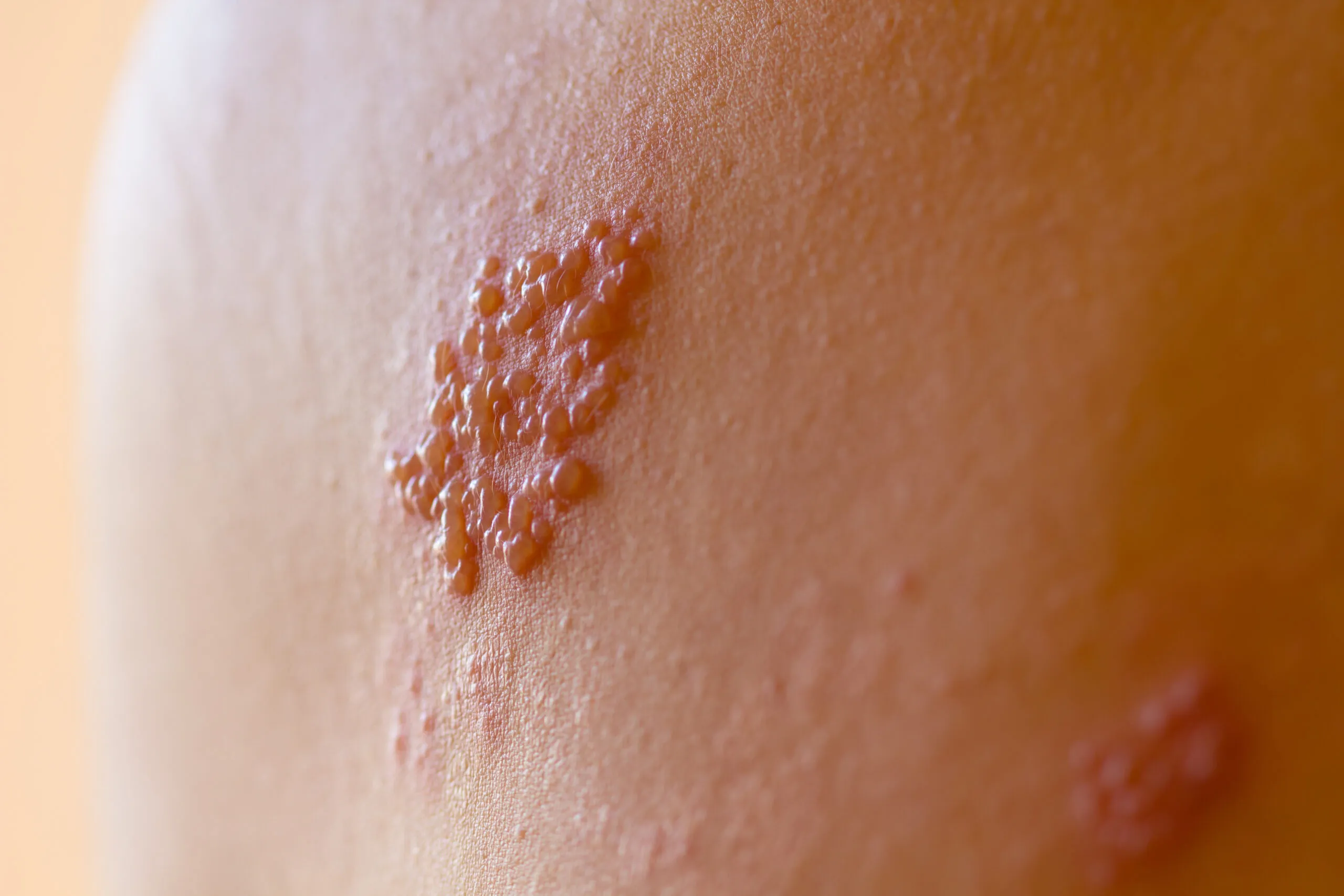
- Red patches appear on one side of the body, usually following a bandlike pattern.
- Fluid filled blisters develop on those red patches.
- Blisters break and crust over several days.
- Crusts heal over 2 to 4 weeks, sometimes leaving skin discoloration or mild scarring.
Pain can range from mild to severe and may continue even after the rash heals. This ongoing nerve pain is called postherpetic neuralgia and is a key reason dermatology care is so important.
If the rash appears near the eye, forehead, or nose, urgent medical attention is needed, because eye involvement can threaten vision.
Why Early Diagnosis and Treatment Matters
Prompt shingles treatment can often reduce the severity and duration of the outbreak. Dermatology providers generally utilize the following tools to aid in controlling the outbreak and providing symptom relief:
- Antiviral medications to slow down the virus
- Pain relief options, including topical creams or oral medications
- Anti-inflammatory care for the skin
- Guidance on how to keep the rash clean and protected
It is best to begin treatment within 72 hours of the rash appearing, which is why you should not wait and see if it goes away on its own. Even if you are past that window, it is still worth being evaluated to manage pain and reduce complications.
You may see many suggestions online for shingles home remedies, such as cool compresses or oatmeal baths. While some home care steps can soothe irritated skin, they should support, not replace, medical treatment, especially when pain is intense or the rash is near the face or eyes.
Shingles Prevention, Vaccine, And Reducing Future Risk
The idea of going through shingles, or going through it again, can feel overwhelming. The good news is that there are important steps for shingles prevention, especially for adults over 50.
A shingles vaccine is recommended for many adults, even if they have had shingles before. It helps train your immune system to keep the virus in check and can significantly reduce the risk of a future outbreak and of long-term nerve pain.
Other helpful steps include:
- Managing chronic conditions with your healthcare team
- Getting enough sleep and rest
- Keeping stress in check
- Staying up to date with routine medical care
These steps do not guarantee that you will not have a shingles outbreak, but they do support your body in staying as resilient as possible.
When To See a Dermatology Specialist In Northbrook
If you suspect Shingles and are located in Northbrook, IL or the surrounding areas, care is within reach. Contact our office for an appointment if you experience any of the following symptoms:
- A new, painful, one-sided rash
- Burning or tingling sensations followed by blisters
- A rash near your eyes, nose, or forehead
- Pain that persists after a rash has healed
At Derm Collective North Shore, our dermatology providers are trained to recognize shingles quickly, confirm the diagnosis, and create a care plan that is appropriate for your symptoms, medical history, and risk factors.
Next Step: Talk To Derm Collective North Shore
Living with nerve pain and a blistering rash is exhausting, especially when it comes out of nowhere and disrupts sleep, work, and daily life. You deserve clear answers, relief, and a plan to lower the chance of long-term complications. If you think you might be dealing with shingles, or you have questions about prevention and vaccination, consider scheduling a consultation with Derm Collective North Shore. A personalized visit can help you understand what is going on with your skin, explore treatment options, and talk through ways to lower your risk in the future, all with support that respects your comfort and concerns. Schedule Your Dermatology Appointment Today!